
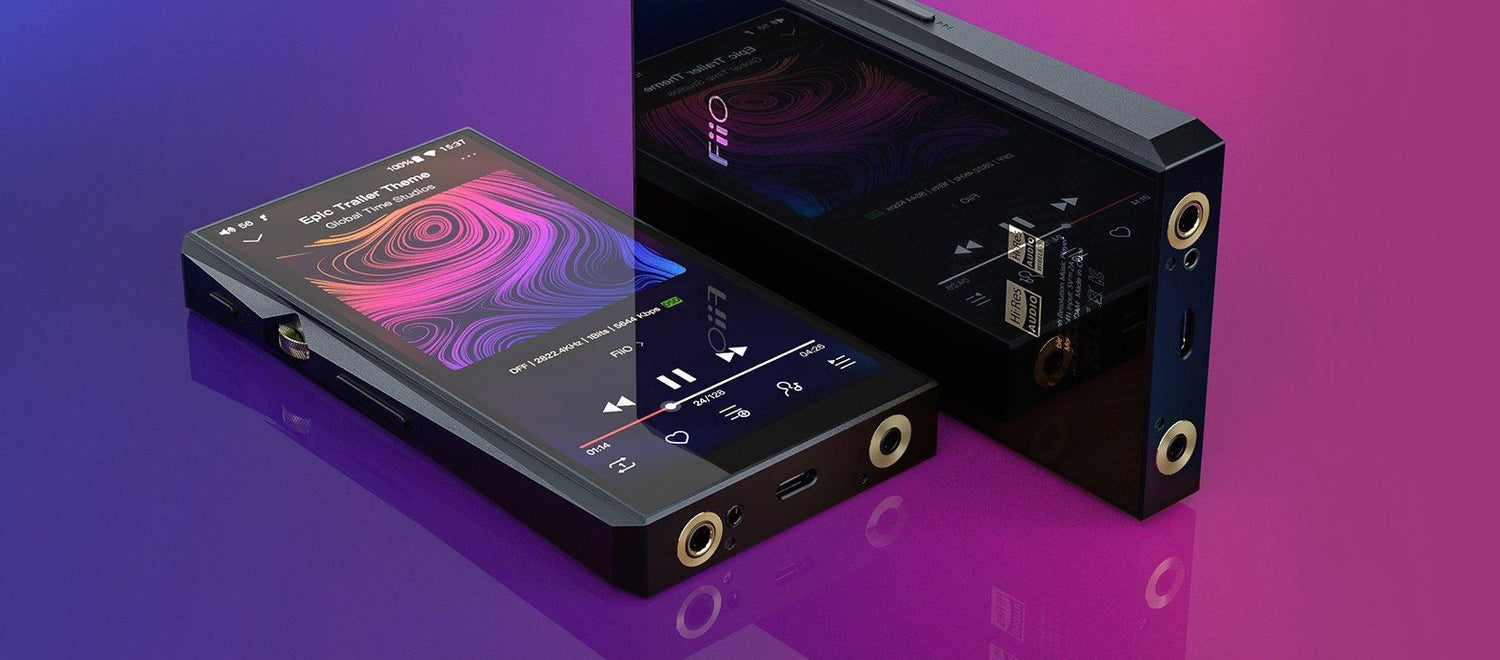
Balanced vs unbalanced connections
Balanced and unbalanced connections are often referred to as pro and semi-pro respectively. Using a balanced output may have a positive effect on audio performance, and it’s important to mention that the balanced circuitry takes place after the point of conversion from digital to analog audio. In short, the effect of using balanced connections is to provide a better signal-to-noise ratio. The slightly theory-heavy explanation is that balanced outputs offer an impedance-balancing (between the individual wires) effect on the connected cable, resulting in a better transference of the audio signal.
Better than what you might ask?
Well, unbalanced outs, naturally. In the real world, spaces with lots of wiring and/or light dimmers are notorious for affecting unbalanced connections, causing ground loops and hums to audio equipment. This is really when balanced outputs can come handy and act as effective hum-destroyers. Balanced connections found on portable audio equipment require the so-called 4-point plugs TRRS jacks (Tip, Ring, Ring, Sleeve). They have the same shape as regular small headphone jacks (3.5mm) but are either slightly smaller (2.5mm) or in very few instances slightly larger (4.4mm).

Types of digital audio players ports
1. Stereo mini-jack (1/8" / 3.5mm)
Headphone out, Analog
2. Stereo mini-jack 2.5mm (Balanced, with a 4-point, TRRS).
3. Stereo mini-jack 4.4mm (Balanced, with a 4-point, TRRS).
4. Optical (3.5mm)
5. USB (micro B, mini, c-type)

6. USB (micro B) OTG (on-the-go)
Wireless connections of digital audio players
1. Bluetooth connection
Bluetooth is a wireless connection standard that allows for the exchange of data over short distances. With its support of Bluetooth, most DAPs can transmit the SBC/aptX/aptX HD/LDAC/LHDC Bluetooth format as well as receive certain formats. The DAP's high-performance Bluetooth radio ensures you can transmit signals further with stronger overall signal strength, so nothing can get in your way of enjoying quality wireless music. Until 2019, Rare DAP featured Bluetooth 5 which has enough bandwidth at 2Mbps – double that of Bluetooth 4.2 – to support two sets of wireless devices at the same time.
2. DLNA connection of the digital audio player
DLNA is designed to act as a bridge between your various bits of kit, so you can watch a film from your PC on your big-screen TV, play music from your DAP on your stereo, or send shots from the family photo album to your wireless printer via your tablet. Think of it as a kind of home cloud: it shouldn't matter where your music is or what device you're currently holding; with DLNA, whatever you want should come to wherever you are and whatever you're using. So does some digital audio players- Shanling M5s
3.Airplay
Do you have so much music that you can't even fit them into the largest micro-SD cards? Then simply play them via AirPlay for iOS devices for the ultimate inconvenience.

10 Best Portable Digital Audio Players under $1000 for Audiophile | Hifigo
Common audio connectors


2 comments
Claus Koefoed
I have been looking for your information. The Fiio M15 manual says TRSS. Can you confirm that the 4.4 mm on M15 is a Pentaconn TRRS connection, Thanks Claus
At point three, for the 4.4 mm it is suggested that the plug is TRRS.
But, this plug is called a Pentaconn for the reason that it has 5 connections.
The plug is TRRRS. While the Sleeve is not used.
Information can be found here:
http://www.diyaudioblog.com/2016/02/headphone-connectors-pins-pinouts-for.html
Rene
Hi,
At point three, for the 4.4 mm it is suggested that the plug is TRRS.
But, this plug is called a Pentaconn for the reason that it has 5 connections.
The plug is TRRRS. While the Sleeve is not used.
Information can be found here:
http://www.diyaudioblog.com/2016/02/headphone-connectors-pins-pinouts-for.html
Leave a comment
All comments are moderated before being published.
This site is protected by hCaptcha and the hCaptcha Privacy Policy and Terms of Service apply.